Commercial vs Residential Shower Mats
When to choose commercial shower mats over residential alternatives
One of the most commonly searched terms by our customers is “shower mat”. If you've searched this yourself, you've likely come across many inexpensive, small mats sold in standard sizes that look like this:
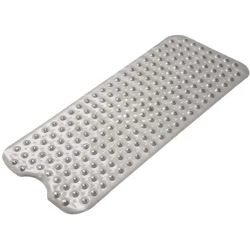
These are not the types of mats we offer. Our commercial-grade shower mats are frequently used in residential settings as they offer significant performance advantages and they look well in contemporary interiors. However, in some cases they are NOT a good choice. Here’s what you should know:
What Is a Commercial Shower Mat?
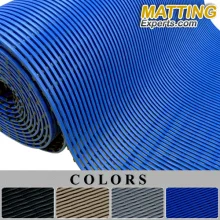
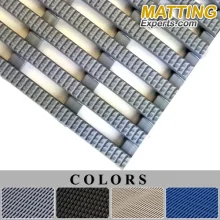
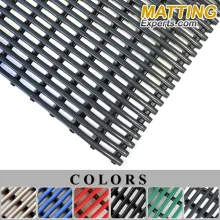
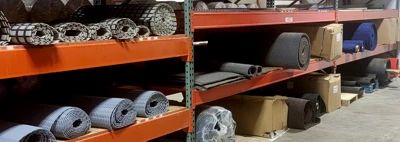
Commercial and industrial shower mats are made from heavy-duty PVC (vinyl) and typically manufactured in large rolls, then cut to size. They're built for durability and safety in wet environments.
What Sizes Are Available?
Sizes are limited only by the full roll dimensions. Most rolls come in 2 feet; 3 feet or 4 feet widths and lengths ranging from 23 to 50 feet. The largest rolls we used to stock were 60 feet long but we switched back to shorter rolls. Large rolls were very difficult to handle due to their weight and were too heavy for FedEx or UPS so had to be shipped on a truck.
How Do Commercial Shower Mats Work?
These mats are engineered for maximum drainage and airflow. Water flows through the mat and dries quickly. Many models include textured surfaces for added traction and slip prevention. Shower mats with more aggressive textures offer greater safety but may feel less comfortable on bare feet - a tradeoff many facilities are happy to make for added safety in their shower areas..
How Thick and Heavy Are They?
Thickness of commercial shower matting range from 1/4" to 1/2 and weigh about 1 lb per square foot. Their weight keeps them securely in place, especially in shower stalls with walls on three sides or partitions. Smaller pieces may shift, but in most commercial installations, the layout helps lock them in.
How Long Do Commercial Shower Mats Last?
When properly used in indoor or sheltered environments like locker rooms, saunas, or commercial showers, our commercial-grade mats can provide many years of service. They're engineered from high-quality vinyl designed to resist wear in wet conditions and daily foot traffic..
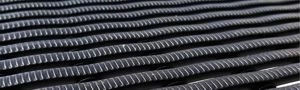
Like any flooring solution, prolonged exposure to direct sunlight can shorten the life of mats not rated for UV resistance. If you’re installing mats in outdoor showers or poolside areas with regular sun exposure, we strongly recommend choosing from the following UV-resistant options, which are specifically tested to hold up when exposed to direct sunlight:
-
VinGRATE Mats
-
VinAIR Mats

-
VinTUBE Mats
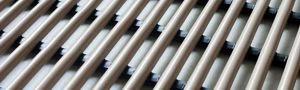
These mats are ideal for outdoor showers, pool decks, and high-moisture areas where sun exposure is a factor. Choosing the right mat for your application ensures maximum longevity and safety—and saves you from needing replacements anytime soon.
When Residential Shower Mats Might Be a Better Option
While commercial shower mats offer superior performance, there are situations where traditional residential mats are more practical:
-
Scenario 1:
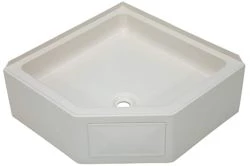
You have a molded fiberglass or acrylic shower tub with rounded bottom corners. These tubs can be too slippery and commercial mats do not have suction cups that would cling to the shower pan may slip upward due to the sloped edges.
-
Scenario 2:
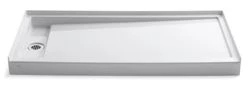
Your tub has 90° corners that could keep a mat in place, but the floor slopes steeply toward the drain. Even though body weight presses the mat down, the slope may push it out of place. In these cases, suction cup mats or peel-and-stick abrasive strips may be safer:
Solution:
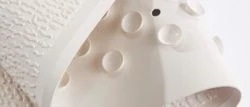
Use mats with suction cups:
Or consider self-adhesive non-slip strips for added traction:

Pros and Cons of Non-Commercial Shower Mats
Pros:
- Better grip on smooth shower pans provided by suction cups.
- Available in many shapes, colors, and textures.
- May fit perfectly in pre-molded tubs with standard dimensions.
- Some models have a hole positioned over the drain for water to drain.
- Soft and comfortable on bare feet.
- Low-cost alternative to commercial mats.
- Lightweight and easy to lift and clean.
Cons:
- Less aggressive texture—can become slippery when mildew forms.
- Difficult to clean around suction cups.
- May be damaged by pressure washing.
- Cannot be trimmed or customized easily without compromising appearance and/or function.
- Fewer drain holes—water may sit underneath and promote mildew growth.
- Thin and prone to slipping if suction fails.
- Degrades very quickly when exposed to direct sunlight.