How to choose food-service matting
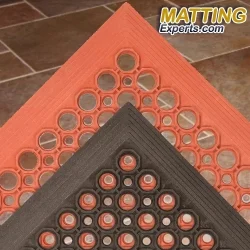
- Cook lines and fry stations: look for drainage and a grease-resistant compound appropriate to the actual exposure.
- Dishwashing areas: prioritize water drainage, secure transitions and easy access for cleaning beneath the mat.
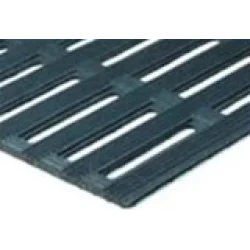
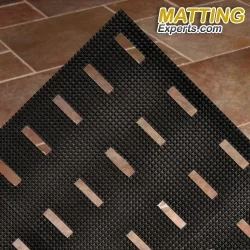
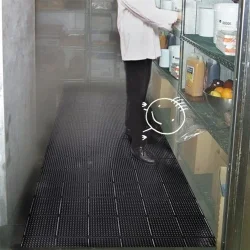
- Bars: open-slot runners or drainage mats can cover long, narrow work zones where spills recur.
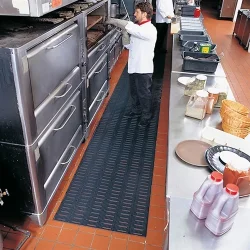
- Prep and bakery stations: choose cushioning and a surface that fits the expected mix of dry ingredients, light moisture and cleaning.
- Cold storage: verify that the construction is intended for the temperature and damp conditions.
Layout and sanitation
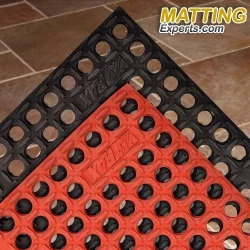
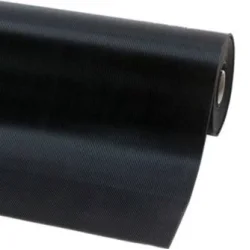
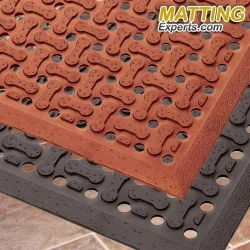
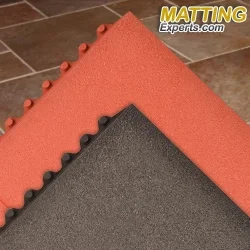
Use individual mats at defined stations, connectors for adjacent sections, roll goods for long lines or modular tiles for wider irregular areas. Measure equipment clearances, drains and employee travel paths. Beveled edges help where foot traffic or carts cross onto the mat.
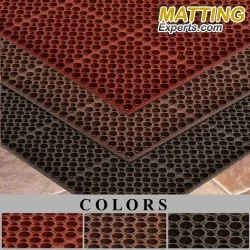
Kitchen matting must be part of the sanitation plan. Lift movable sections, remove food debris, clean both sides and wash the floor below often enough for the operation. Keep holes and slots open, use chemicals compatible with the rubber or vinyl, and inspect edges and connectors. Matting does not replace prompt spill cleanup or functioning floor drains.
Material performance varies by formulation. Consult the chemical resistance chart as a starting reference and tell us about grease, cleaners, dimensions and shift conditions for product-specific assistance.