Selecting a drainage mat
- Match the contaminant: water, grease, oils and chemicals affect materials differently. Choose the product compound for the actual exposure, not appearance alone.
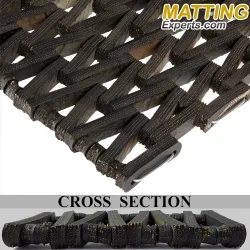
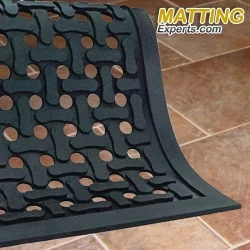
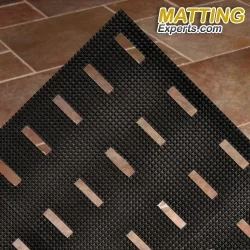
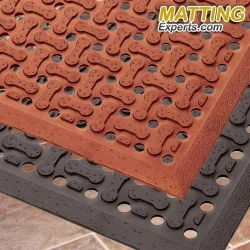
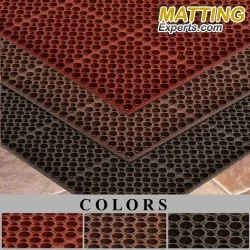
- Compare openings: larger holes move substantial liquid and debris; narrower slots may suit areas where smaller items or cart wheels are a concern.
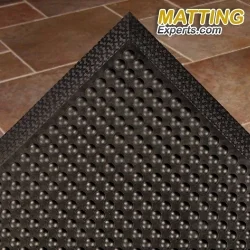
- Consider comfort: resilient rubber and molded support structures can combine drainage with cushioning for standing workers.
- Plan the coverage: single mats fit defined stations, connectors join neighboring mats, and interlocking or rolled products cover larger layouts.
- Address transitions: select molded or attachable beveled borders where workers or carts cross the mat edge.
Cleaning industrial drainage matting
Drainage only works when openings and the floor below remain clear. Lift movable mats on a regular schedule, remove accumulated debris, clean both sides and wash the substrate. Use cleaning chemicals compatible with the mat material, rinse as required and allow the area to drain or dry before returning it to service.
Drainage matting does not eliminate the need to repair leaks, maintain floor drains or follow facility safety practices. Inspect sections and connectors for damage or movement and replace worn components.
Use the matting chemical resistance chart as an initial material reference, then contact Matting Experts with your fluid exposure, cleaning process and dimensions for a tailored recommendation.