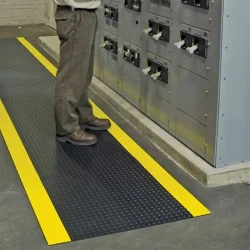
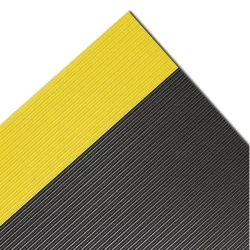
Common safety mat applications
- Electrical equipment areas: switchboard matting is designed for use around electrical apparatus. Compare the product’s stated test standard, dielectric properties, thickness and class with the facility’s required specification.
- Cold or damp floors: elevated or insulating constructions can separate workers from an uncomfortable substrate while providing a textured walking surface.
- Floor protection: resilient mats can shield finished floors from repeated traffic or localized wear when the material is compatible with the substrate.
Specify from the product data
Before purchasing, document the hazard, required standard, operating voltage where relevant, exposure to oils or chemicals, temperature range, traffic and substrate. Confirm that the exact product—not merely the general category—meets those requirements. Electrical safety matting should be installed, inspected and replaced according to applicable regulations and the manufacturer’s instructions.
Measure the full work zone and account for the direction of travel, door and equipment clearance, seams and edges. Rolls can cover long equipment lines; individual mats suit fixed stations. Keep the mat clean, dry where required and free from cuts, punctures, curling or contamination that could interfere with its intended function.
For general selection questions, see our Industrial Safety Mats FAQ. For a regulated or unusual application, contact us with the specification so we can help identify products whose published data matches it.